

In the late nineteenth century, businesses commonly paid to transmit telegrams by the word. The price turned language into a direct operating expense. Commercial enterprises responded with private cipher books and telegraphic codebooks that mapped recurring instructions to compact, agreed signals.
Where sender and recipient shared the same code, a single billable word could convey an entire standardized phrase. The technology was revolutionary; the commercial response was practical. If words cost money, use fewer words.
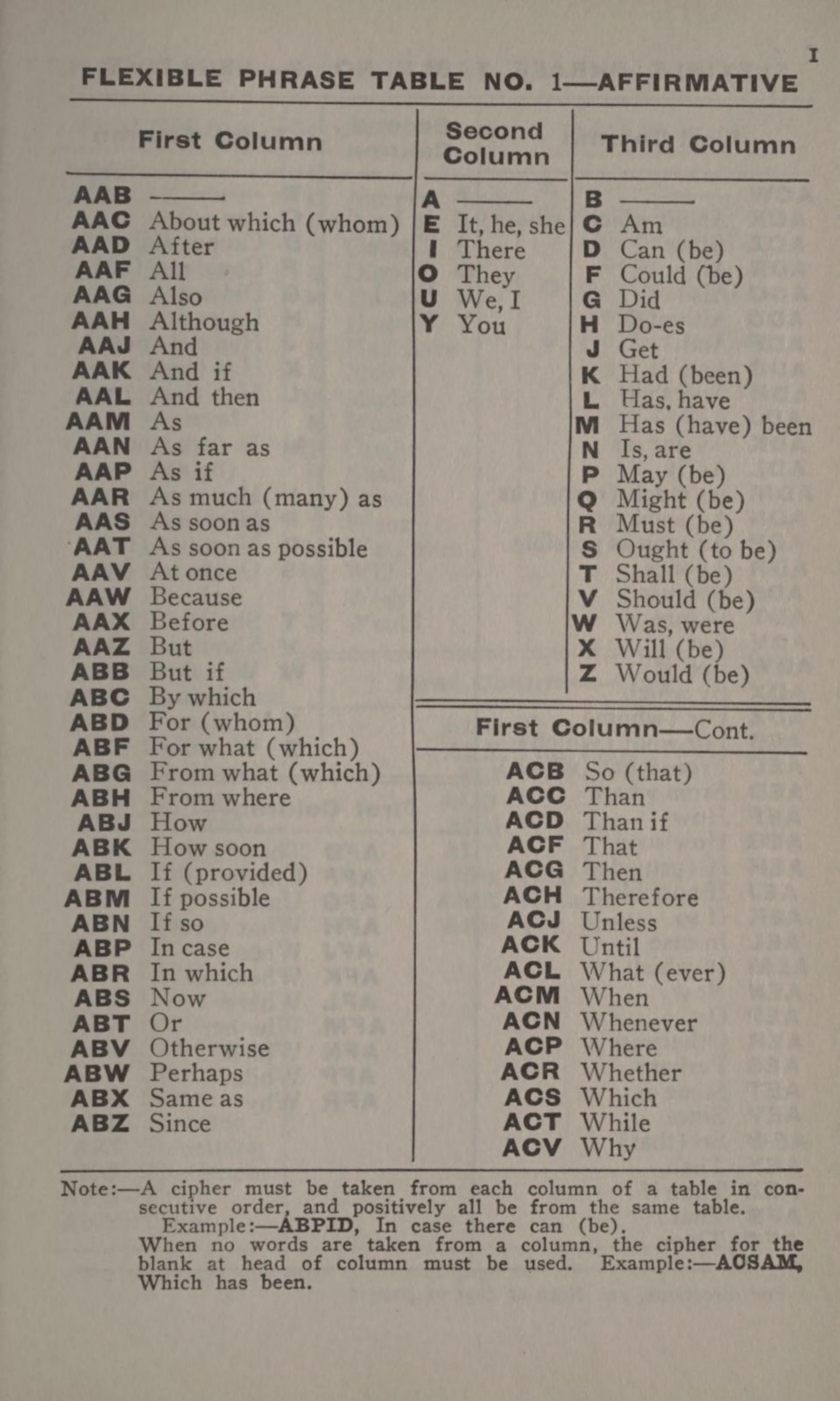
A codeword could stand for an entire phrase.
ABP + I + D → ABPID“In case there can (be).”More than a century later, AI teams are shortening prompts, trimming context windows, routing requests to smaller models, caching previous answers and enforcing token budgets. The economic impulse is familiar: once a unit becomes visible and expensive, organizations learn to optimize it.
The unit has changed.The instinct has not.
The analogy is behavioral, not technological. A telegraphic codeword was agreed shorthand for a known phrase. An AI token is a segment of model input or output, not a fixed packet of meaning or intelligence. The connection is the organizational response to a newly priced meter.
New technologies make new costs visible
The meter remains. Executive attention moves on.
Minutes and bandwidth still matter operationally; they simply no longer define the executive conversation. Tokens may follow: tighter operating discipline, less boardroom attention.
The optimization trap
Measurement directs behavior. Teams organize around the unit, suppliers compete against it and managers reward its improvement. The danger is allowing a better technical meter to stand in for a better business result.
The lowest token bill may not be the lowest-cost workflow.
Conceptual relationship. The cost mix and optimum vary by workflow, model, quality and risk requirements.
The distinction from telegraphy matters. A codebook compressed an agreed phrase between parties who understood it. Reducing tokens can remove context, constrain an instruction or route work to a less capable model. The unit is not reasoning, but changing it can still change the output and the work required to use it.
The dashboard records the saving; retries, exception handling and returned work often sit elsewhere. Lower token use may still be right, but the calculation is incomplete until those consequences are visible.
Did the underlying work become cheaper, faster, better or more valuable?
When the meter matures
The operational meter gets busier as the leadership lens moves on.
The meter can become busier in operations while becoming less central to executive management.
Software can now become the consumer.
AI also exposes the limit of the historical analogy. Earlier technology meters largely reflected activity initiated by people. Agents can now invoke models, trigger workflows and interact with other agents without waiting for a person to initiate each action. Removing that human constraint means falling unit costs can produce nonlinear growth in aggregate demand.
A token records what the system consumed, not what the organization gained. Maturity begins when the machinery manages the meter and the boardroom manages the result.
Tokens matter today.
The more interesting question is what will matter when tokens are no longer the headline.